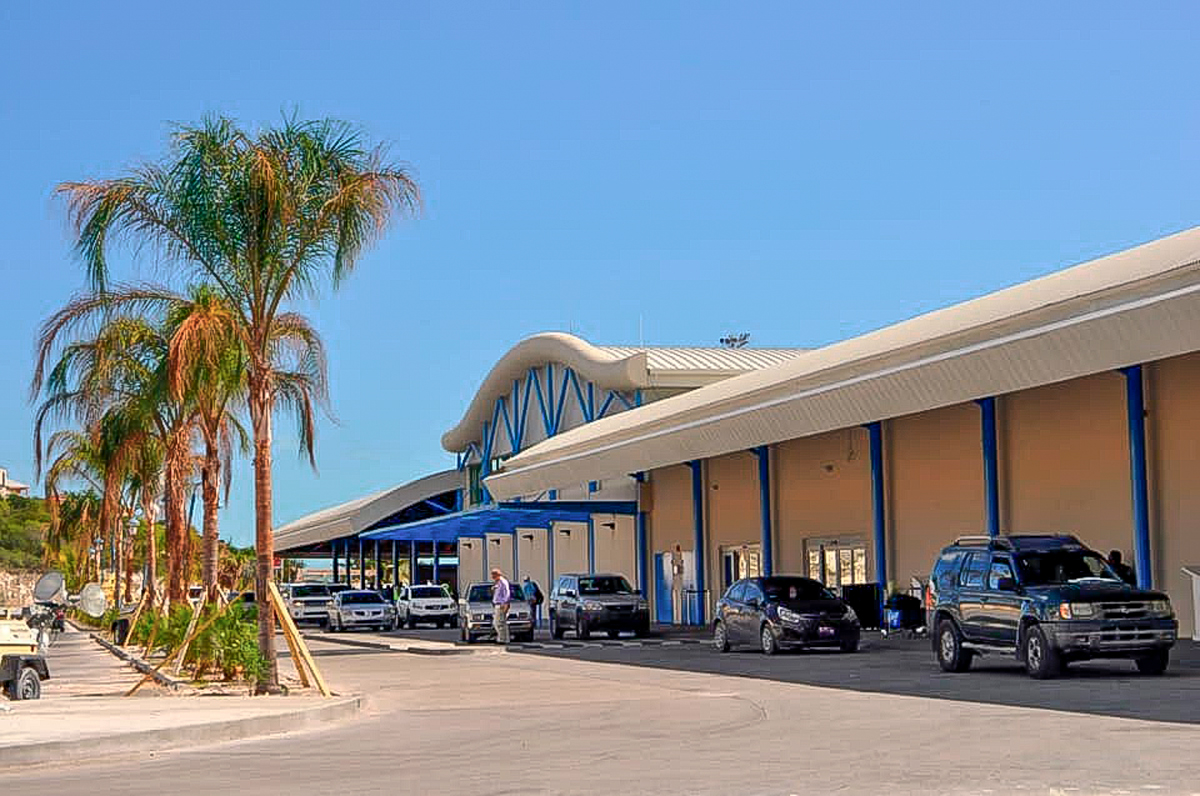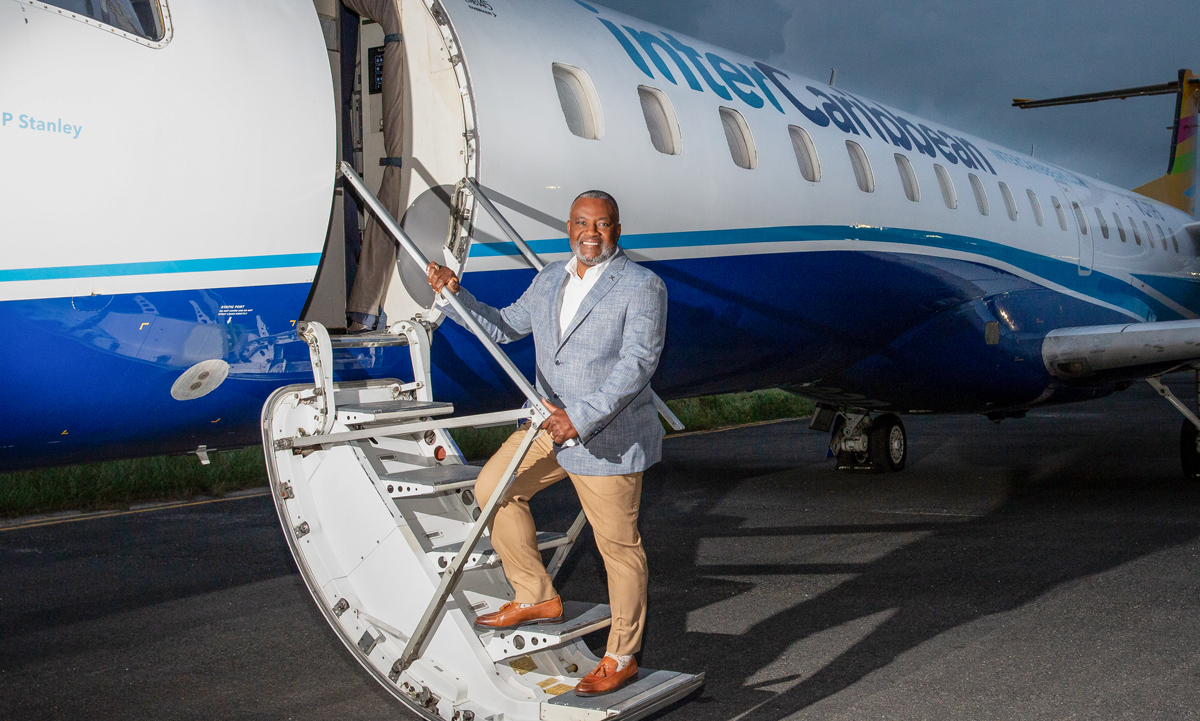
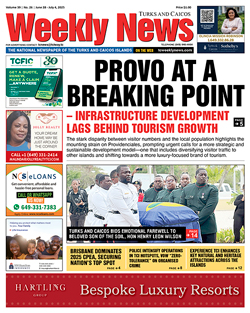

- Infrastructure development lags behind tourism growth
By OLIVIA ROSE
The Turks and Caicos Islands are at a critical juncture, facing the complex challenge of balancing the economic boons of a thriving tourism industry with growing concerns about overdevelopment and its impact on the islands’ delicate environment and infrastructure.
Central to navigating this intricate path forward is a recently commissioned “carrying capacity report,” which government officials are now touting as the definitive blueprint for sustainable growth.
This pivotal study, born from a recognition that unfettered expansion could jeopardise the very appeal of these idyllic islands, is set to redefine how the Turks and Caicos manages its most vital economic sector.
The delicate balance between economic expansion and the imperative to protect fragile ecosystems, manage carrying capacity, and preserve the quality of life for residents is now at the forefront of national discourse.
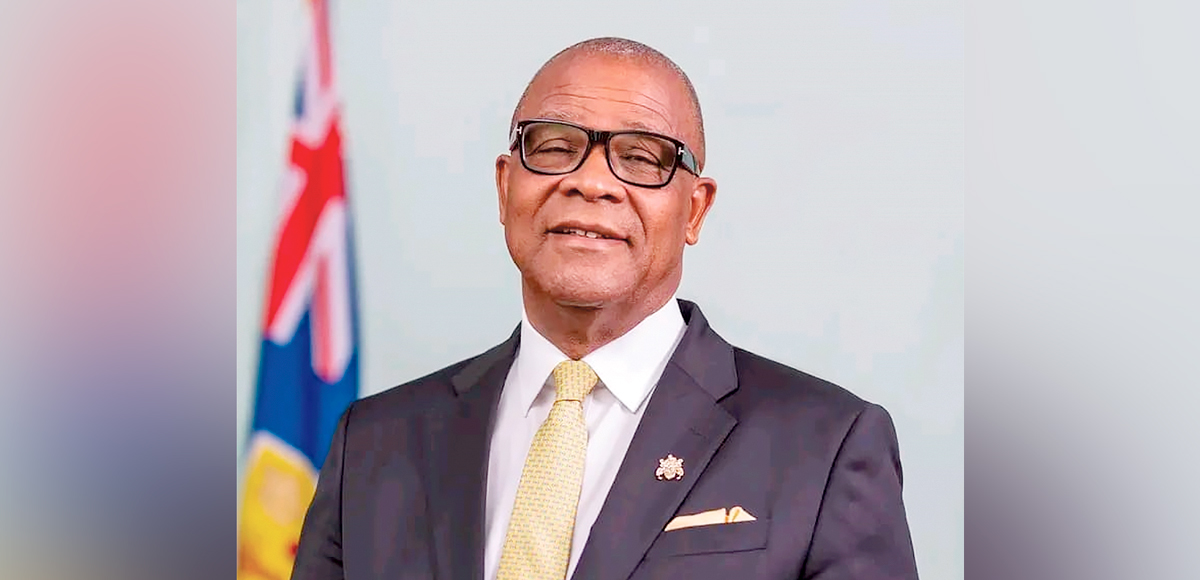
At the recent Turks and Caicos Islands 2nd Annual Business Outlook conference held at the Palms Resort on Providenciales, the Minister of Tourism, Hon Zhavargo Jolly, addressed these pressing issues head-on.
The Weekly News asked the Minister a critical question at the event: “We’ve seen strong tourism recovery and continued growth in arrivals and hotel development, particularly in Providenciales. But this growth has raised serious concerns about overdevelopment, strained infrastructure, and environmental degradation. How is your ministry balancing the push for economic expansion with the need to protect fragile ecosystems, and preserve the quality of life for residents?”
Minister Jolly responded with a stark assessment, emphasising the pivotal role of a recently commissioned “carrying capacity report”.
He said: “That carrying capacity report is our playbook moving forward. It speaks to every aspect of that question you just asked. It’s told us that our infrastructure cannot sustain the current trend of growth, especially here in Providenciales.”
The Minister did not mince words about the impact on Providenciales, colloquially known as “Provo.”
“The truth is, Provo takes a substantial amount of beating in terms of not just infrastructure, but social,” he stated. “It speaks to the social impact of having 800,000 people come into your country every year, when your population is only around 40 or 50,000 and of that 40-50,000 you’re lucky if you have 15- 20,000 local Turks and Caicos Islanders.”
He stressed that the financial benefits of tourism is not the sole factor at play.
“For so long, we’ve only looked at the financially beneficial side of tourism, the money it makes, we haven’t looked at the impact,” Minister Jolly explained.
He acknowledged the excitement surrounding new development projects but stressed the need for a strategic approach.
“We have all these pipelines of projects coming into Provo and we get very excited. And I understand in my role and capacity, I have the responsibility to be excited as well. But we have to be strategic, even moving forward in terms of growth, the carrying capacity is very, very clear that we have to be strategic about the growth.”
A key element of this strategy, according to the Minister, is a shift towards quality over quantity in tourism.
“If we want more flights, if we want more visitors, it has to be visitors that fit into our brand, which is high-end luxury. We can’t just accommodate more flights and more people for the sake of doing it, because the reality is, our market is geared towards people with a substantial net worth, or above average net worth.”
He elaborated on the consequences of attracting visitors who don’t align with this high-end market.
“So when people who don’t fit into that financial position travel here, the first thing they’re going to say is, this place is expensive, the food is expensive, the groceries are expensive. And then they’re going to flock to social media and tell everyone, don’t come to Turks. It’s expensive. It’s expensive. And not to be blunt, but the reality is, it’s not that Turks is just expensive, it was expensive for us as locals, but it’s expensive for a traveller, because it’s not a destination that’s geared towards you.”
Minister Jolly asserted that there is no shame in this targeted approach.
“There’s nothing wrong about saying that you travel to Saudi Arabia, you travel to Dubai, you travel to all these places. They have a price point. If it fits in for you, then great, come. If it doesn’t, you know, get your money up.
But the truth is, that’s the kind of growth that we want. We want quality over quantity, and that would actually help with our infrastructure issues and the demand.”
Beyond attracting the right kind of tourist, a critical component of alleviating strain on Providenciales involves diversifying visitors’ traffic.
“But the truth is, the blunt point is, we have to get our visitors to go to the other islands. We have to get our tourists to go to Grand Turk, go to North Caicos, go to Middle Caicos. Because the reality is, it won’t only benefit those economies. It takes the strain off of Provo.”
The Minister further highlighted the untapped potential of these other islands.
He said: “We have all these attractions, these historic sites, just sitting there, but yet we have 800,000 people coming to Provo, and the only thing they’re going to do is go eat dinner and then go to (Noah’) Ark.”
He emphasised the government’s responsibility in facilitating this shift. “The reality is, we have options, but we as a government have a responsibility to get these tourists, put these tourists in an ideal position to go and visit, whether it’s by successfully creating international flights like South Caicos, which we did, by having a direct flight from Miami.
He continued: “The same thing into Grand Turk or North and Middle Caicos, whether it’s finally investing a substantial amount of money in the spinal bridge and maybe connecting all the islands”. This, he said, would enhance tourism and movement between these islands.
The “Carrying Capacity study,” commissioned in 2024 and being carried out by Target Euro, is the cornerstone of this strategic shift.
Its main objective is to design and develop a Tourism Carrying Capacity (CC) model for the Turks and Caicos Islands that can permanently monitor all social, cultural, environmental, and economic impacts generated by the tourism industry.
This model aims to provide invaluable insights to tourism stakeholders, empowering them to define and implement sustainable policies and strategies.
The model itself was designed with the participation of both public and private tourism stakeholders, ensuring a comprehensive approach.
Minister Jolly underscored the importance of utilising this vital document.
He continued: “But the reality is, this document has put us in a very good place in terms of knowing what we need to do, but at the same time, and just being realistic, if we don’t use it, then what’s the point? Because in my very short lifespan, I’ve seen a lot of consultation, I’ve seen a lot of documents. I’ve seen a lot of 10-year plans that ended up just collecting dust. Now, these things could have helped advance us way further than we are. These documents were done by very highly paid consultants and gathered a lot of very valuable information.”
In a resolute declaration, Minister Jolly pledged to ensure the study’s implementation. “But I know, as long as I’m the Minister of Tourism, this document that we spent a substantial amount of money on, and which is very useful, will be used and will be applied.”
Tourism dominance
The Minister also highlighted the immense responsibility that comes with tourism’s dominance in the national economy. “Indirectly, we’ve assumed that [tourism] is responsible for about 80% of our national GDP,” Jolly declared.
“Now that’s an incredible dominant figure, and to a lot of people, it’s something to celebrate, and in reality, it is. But when you think about it, it’s an incredible responsibility, the fragility associated with tourism. It’s almost like living in constant fear that your bread and butter can really turn left or sink at any moment.”
The Turks and Caicos Islands now face the monumental task of translating the insights from the Carrying Capacity study into actionable policies, ensuring that the economic engine of tourism continues to thrive without compromising the very resources that make the islands a desirable destination.
Jolly underscored that the challenge ahead is to manage the territory’s growth strategically, fostering sustainable tourism that benefits all residents and preserves the unique charm and ecological integrity of the Turks and Caicos Islands for generations to come.